
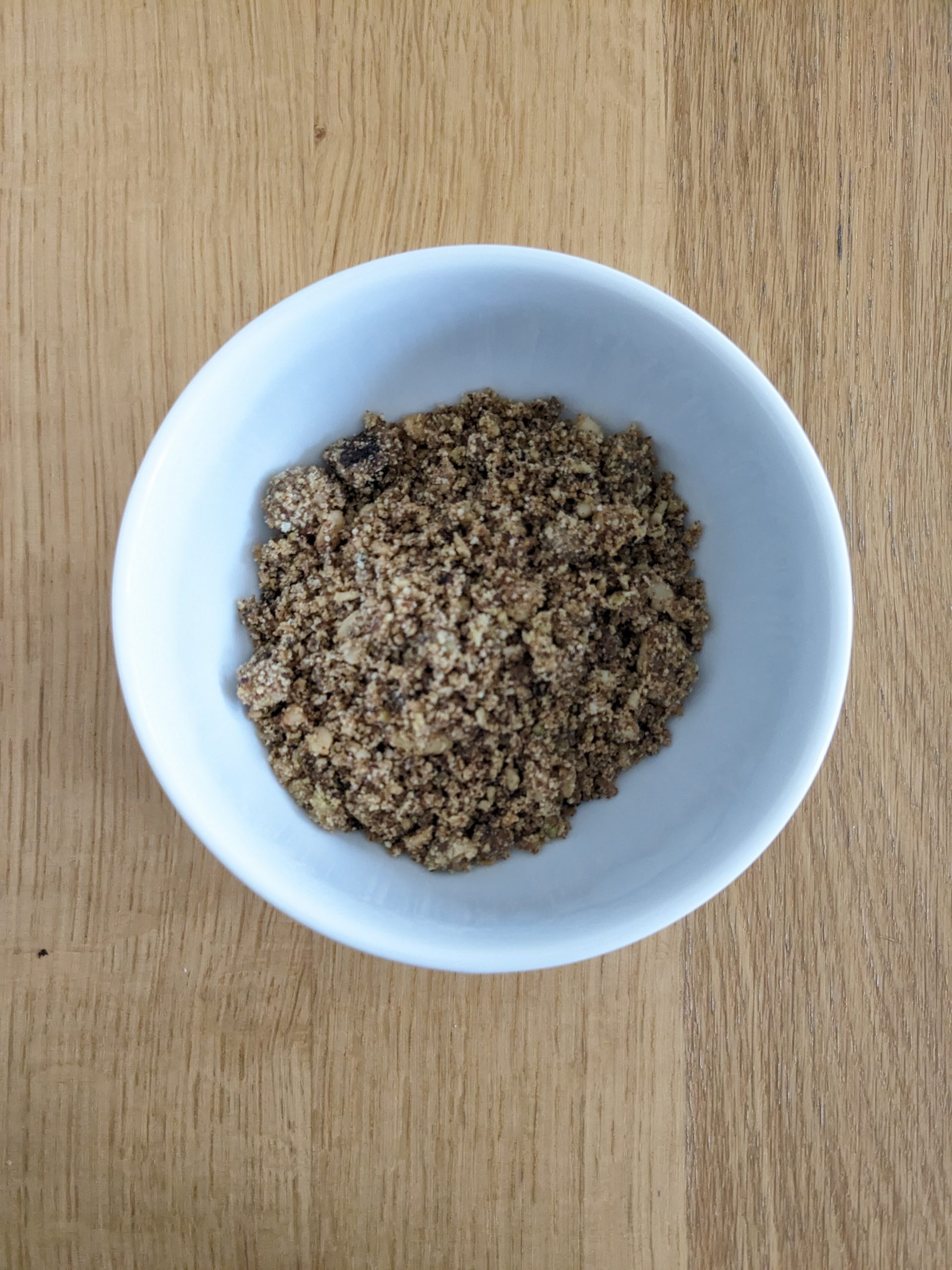


Panjeeri is known for its nutritional value. It contains a mixture of nuts and dried fruit.
There are many ways you can eat panjeeri, whether it’s straight-up spoonfuls, or adding it to any meal. The best time to consume panjeeri is during the cold months of the year, or all year round for postpartum & breastfeeding mothers. A couple of spoonfuls per day will nourish you with vitamins, minerals, and healthy fats, and it’ll give you a natural energy boost.
Who can eat Panjeeri?
- Adults
- Kids (above the age of 3 years old)
- Postpartum
- Breastfeeding
Not suitable for nut allergy sufferers.
Please note
While panjeeri can offer several nutritional benefits, it’s essential to remember that individual experiences may vary. It’s crucial for postpartum and breastfeeding mothers to have a well-rounded diet that includes a variety of nutrient-dense foods to support their health and lactation. Consulting a healthcare provider or a nutritionist is advisable to ensure that dietary choices align with specific needs during this period.
| Ingredient | Key vitamins & minerals | Main health benefits |
|---|---|---|
| Chia seeds | Omega-3 fatty acids, Calcium, Magnesium, Iron, Zinc | Supports heart health, reduces inflammation, aids digestion (fibre), strengthens bones. |
| Flaxseeds | Omega-3 (ALA), Lignans, Vitamin B1 (Thiamine), Magnesium | Improves cholesterol levels, supports hormone balance, boosts brain and heart health. |
| Peanuts | Vitamin E, Niacin (B3), Folate, Magnesium, Phosphorus | Promotes heart health, supports energy metabolism, and provides plant-based protein. |
| Almonds | Vitamin E, Magnesium, Calcium, Riboflavin (B2) | Powerful antioxidant support, improves skin health, helps regulate blood sugar. |
| Brazil nuts | Selenium, Magnesium, Vitamin E, Zinc | Supports thyroid function, boosts immunity, and acts as a potent antioxidant source. |
| Cashews | Copper, Magnesium, Iron, Zinc, Vitamin K | Enhances energy production, supports healthy blood, skin, and immune system. |
| Vegan butter | (varies by brand; often fortified) Vitamin B12, Vitamin D, healthy fats | Provides fat-soluble vitamins, supports energy and nutrient absorption. |
| Oats | Manganese, Phosphorus, Magnesium, Iron, B vitamins (especially B1) | Promotes heart and gut health, stabilises blood sugar, provides long-lasting energy. |
| Dried blueberries | Vitamin C, Vitamin K, Manganese, Antioxidants (anthocyanins) | Supports brain and heart health, reduces oxidative stress. |
| Dried pineapple | Vitamin C, Manganese, Bromelain (enzyme) | Aids digestion, boosts immunity, supports collagen formation. |
| Dried coconut | Manganese, Copper, Iron, Selenium | Provides healthy fats, supports metabolism, and boosts energy. |
| Dried apricot | Vitamin A (beta-carotene), Potassium, Iron | Supports vision, skin, and heart health; helps prevent anaemia. |
| Sunflower seeds | Vitamin E, Selenium, Magnesium, Folate | Strong antioxidant source, supports immune and cardiovascular health. |
| Organic chickpea flour (gram flour) | Folate (B9), Iron, Magnesium, Phosphorus | Supports energy metabolism, builds red blood cells, helps manage blood sugar. |
| Coconut cil | Medium-chain triglycerides (MCTs), Vitamin E, Iron (trace) | Boosts metabolism, supports brain function, provides quick energy. |
Serving suggestion
Option 1: As-is (dry form)
- Take a small handful (1-2 tbsp) and chew slowly (this is the traditional way). Great as a snack between meals.
Option 2: With warm milk
- Have 1–2 tablespoons with a cup of warm milk to enhance digestion and help absorb the nutrients.
Option 3: Sprinkled over porridge, Weetabix or yoghurt
- Adds flavour, texture, and nutrition.
Portions:
- Adults: 1–2 tablespoons per day.
- Postpartum women: 2–3 tablespoons per day as per energy needs.
- Children: 1 teaspoon mixed in cereal or porridge.
| Source | Relevance | |
|---|---|---|
| McCance & Widdowson’s Composition of Foods | Fundamental UK nutrient database and reference for macro- and micronutrient data in UK foods. FAOHome | |
| Nutrition.org.uk – “Go nuts for nuts!” | Information on micronutrients in nuts (B vitamins, magnesium, phosphorus, copper, manganese, zinc, iron) for UK public health audiences. British Nutrition Foundation | |
| British Heart Foundation (BHF) – “Are nuts good for you?” | Describes that nuts contain protein, B vitamins, vitamin E, minerals such as iron, potassium, selenium, magnesium, zinc, copper. British Heart Foundation | |
| BBC Good Food – “Top 5 health benefits of chia seeds” | Provides UK-relevant nutritional values (calcium, magnesium, iron etc.) for chia seeds. Good Food | |
| The chemical composition and nutritional value of chia seeds (PMC / NCBI paper) | Gives detailed breakdown (per 100 g) of minerals (phosphorus, calcium, magnesium, potassium) and vitamins B1, B2, niacin in chia seeds. PMC | |
| Eufic – “The health benefits of regularly eating nuts and seeds” | A European food safety / nutrition authority that summarises that nuts & seeds are rich in protein, fibre, monounsaturated & polyunsaturated fats, vitamins and minerals (e.g. B-vitamins, calcium, iron, magnesium, manganese, selenium). eufic.org | |
| PMC – “Composition of Nuts and Their Potential Health Benefits — An Overview” | Peer-reviewed article with detailed nutrient profiles of nuts (e.g. macronutrients, mineral contents) that supports many of the entries in your table. PMC | |
| PMC – “Similarities and differences in the nutritional composition of nuts and seeds” | Compares nuts/seeds nutrient-density, includes data such as calcium contribution of almonds, or role of chia seeds in supplying calcium & iron. PMC | |
| Healthline / Medical News Today (global, but often using USDA / standard databases) | For general trait confirmation (e.g. minerals in chia seed: calcium, magnesium, phosphorus, iron, zinc) and health benefits (bone health, antioxidant roles) Harvard Health+3Medical News Today+3Healthline+3 |
If you would like to find out more about nutrients, check out our A to Z Vitamins & Minerals: function, benefits, and what foods you can find them in.

There are no reviews yet.