
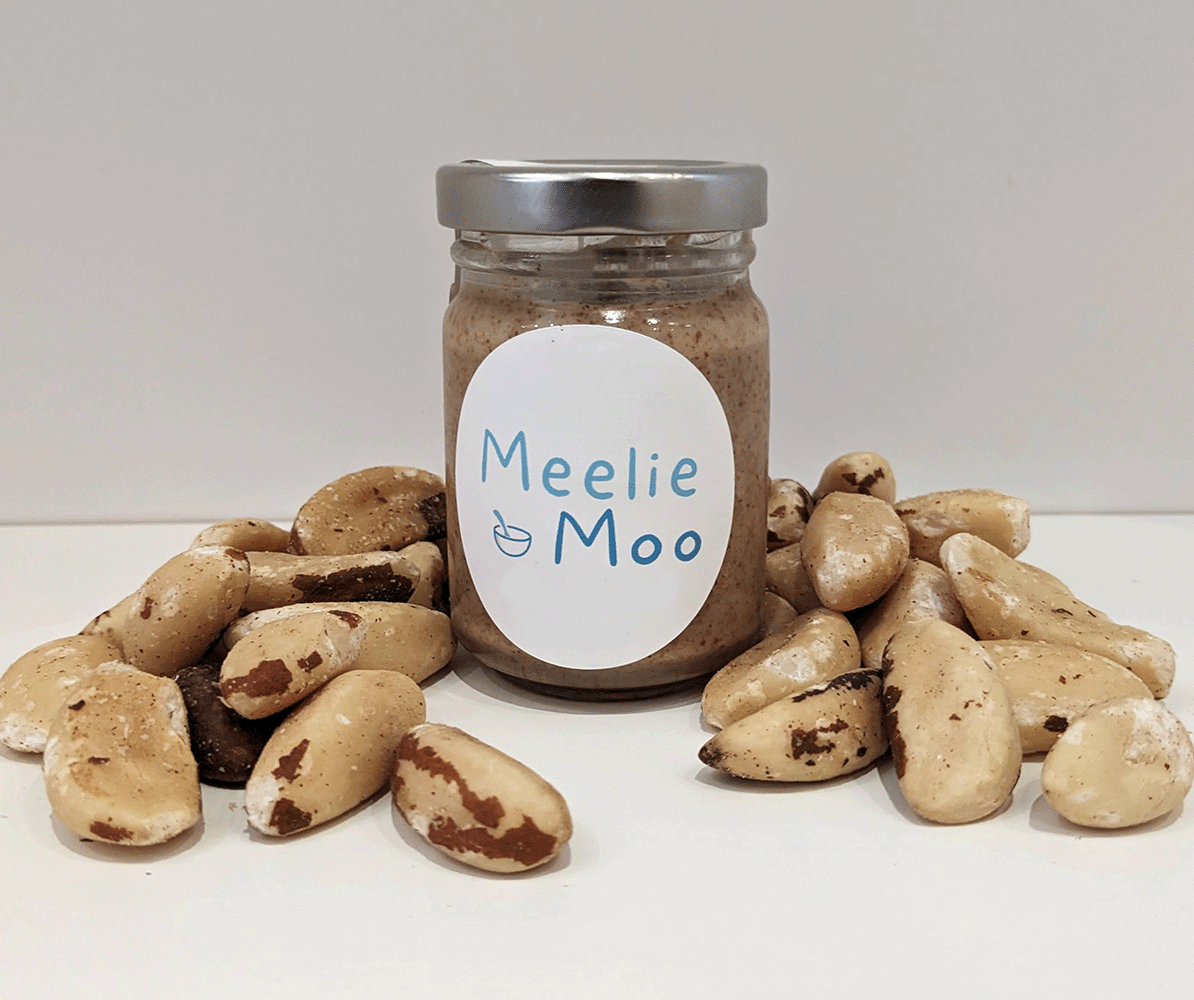

Which vitamins and minerals does a Brazil nut butter have?
Brazil nuts are nutrient-rich and contain several vitamins and minerals that can be beneficial for babies. Some key vitamins and minerals found in Brazil nuts include:
- selenium
- copper
- magnesium
- phosphorus
- vitamin E
- thiamine (Vitamin B1)
Check out the A to Z Vitamins & Minerals: function, benefits, and what foods you can find them in.
What are the benefits of Brazil nuts for my baby?
- Selenium: Brazil nuts are notably high in selenium, which is an important antioxidant that supports the immune system. However, excessive selenium intake can be harmful, so consumption should be in moderation, especially for babies.
- Minerals: They contain essential minerals like copper, magnesium, and phosphorus, which contribute to various aspects of growth and development, including bone health, nerve function, and red blood cell formation.
- Vitamin E: Brazil nuts provide vitamin E, which acts as an antioxidant, supporting the immune system and protecting cells from damage.
- Thiamine (Vitamin B1): These nuts also offer thiamine, an essential nutrient for energy metabolism and nerve function.
- Nutrient Diversity: Introducing a variety of nutrient-rich foods, including Brazil nuts in moderation, can contribute to a well-rounded diet for babies, offering a diverse range of essential vitamins and minerals.
Important Considerations:
Age of baby: It is generally safe to introduce nut butter to a baby between 6 to 12 months of age. Most experts recommend waiting until at least 6 months when your baby starts eating solid foods. This delay allows their digestive system to mature and reduces the risk of allergies.
Nuts are a common allergen, so it’s important to consult with your paediatrician before introducing them. Consider starting with nut butters in small quantities and watching for any allergic reactions.
Portion size: Start with small portions and monitor your baby for any adverse reactions. Nuts are calorie-dense, so be mindful of portion sizes to avoid overfeeding.
Family allergy history: If there’s a family history of nut allergies, consult with an allergist before introducing nuts to your baby’s diet.




There are no reviews yet.