
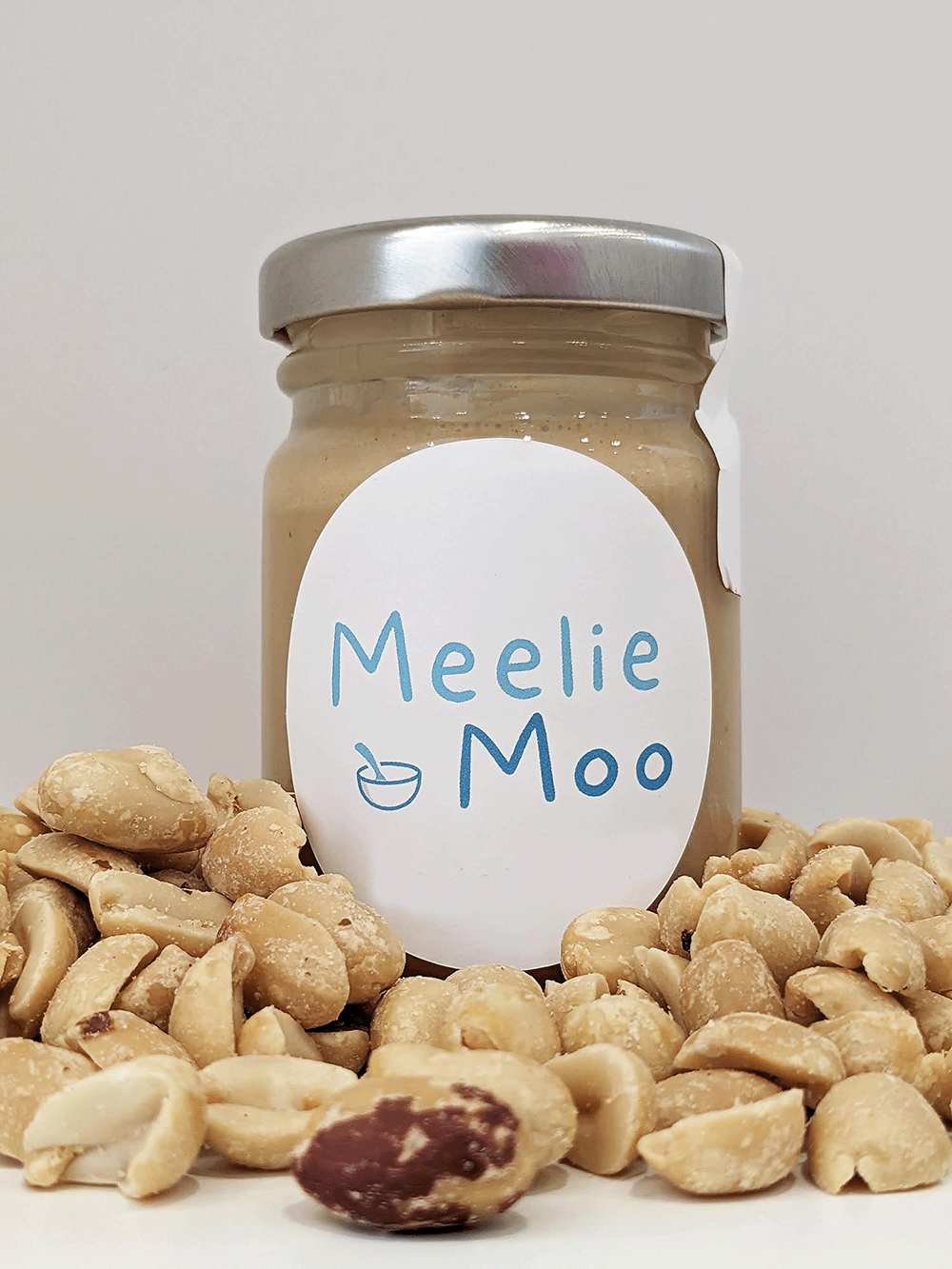

Perfect for introducing new tastes and textures during a baby’s weaning journey, it’s a versatile addition to their diet, suitable for spreading on bread or adding to baby-friendly recipes.
Which vitamins and minerals does this unsalted peanut butter have?
Peanuts, like almonds, contain various vitamins and minerals that can be beneficial for babies. Here are some key vitamins and minerals found in peanuts:
- Niacin (Vitamin B3)
- Folate (Vitamin B9)
- Vitamin E
- Magnesium
- Phosphorus
- Copper
- Protein
Check out the A to Z Vitamins & Minerals: function, benefits and what foods you can find them in.
What are the benefits of peanut butter for my baby?
- Nutrient Density: Peanuts are rich in nutrients such as protein, healthy fats, and essential vitamins and minerals like niacin, folate, vitamin E, magnesium, and phosphorus. These nutrients support a baby’s growth and development.
- Protein Source: Peanuts are a plant-based source of protein. However, it’s important to note that breast milk or formula should be the primary protein source for infants. Peanuts can be introduced as part of a varied diet when babies start eating solid foods.
- Energy and Satiety: The healthy fats and protein in peanuts can provide a good source of energy for babies. They can also contribute to a feeling of fullness, helping to manage hunger between meals.
Important Considerations:
Age of baby: It is generally safe to introduce nut butter to a baby between 6 to 12 months of age. Most experts recommend waiting until at least 6 months when your baby starts eating solid foods. This delay allows their digestive system to mature and reduces the risk of allergies.
Nuts are a common allergen, so it’s important to consult with your paediatrician before introducing them. Consider starting with nut butters in small quantities and watching for any allergic reactions.
Portion Size: Start with small portions and monitor your baby for any adverse reactions. Nuts are calorie-dense, so be mindful of portion sizes to avoid overfeeding.
Family allergy history: If there’s a family history of nut allergies, consult with an allergist before introducing nuts to your baby’s diet.



There are no reviews yet.